
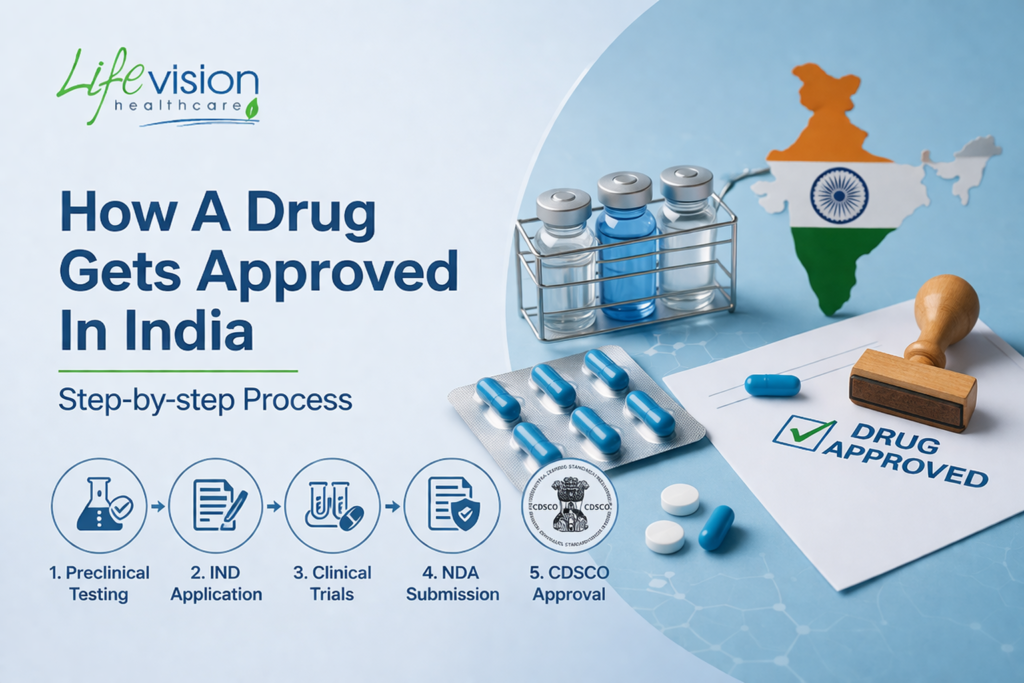
Did you know drug approval in India isn’t an overnight process? It requires lots of research, regulatory compliance, drug testing, and following the adherence guidelines to ensure the drug is safe for patients and working with patients. No matter if you are new to the pharmaceutical sector, an entrepreneur, a businessman, or a healthcare enthusiast, when you understand the drug approval process in India, it can help you to save time and navigate this complex pathway efficiently. If you don’t know How A Drug Gets Approved In India: Step-by-step Process, don’t worry, in this article, we will discuss the steps for drug approval in India.
The indian pharmaceutical industry is estimated to reach $130 billion by 2030, from US$50 billion in FY 2023-24, as studied by Wikipedia.
Why Does Drug ApprovalMatters?
Drug approval is an important process to ensure the drug is safe for patients before being approved. Lots of regulatory authorities approve drugs with legal clinical trials, such as the Central Drug Standards Control and global bodies or the World Health Organization, which evaluate clinical trials and find various potential risks. All healthcare organizations help to protect public health, building trust, and the healthcare system prevents harmful drugs from entering the pharma market.
Key Reasons For Drug Approval Matters:
- Drug approval ensures patent safety
- Prevent harmful & low-quality medicines
- Build trust in healthcare and pharmaceuticals
- Promote scientific validation throughout clinical trials
- Helps to support global healthcare standards and compliance
Let’s Understand The Drug Approval Process Step By Step.
Step 1: Preclinical Research and Development
When a drug comes for approval, they first test the drug on animals and cell cultures, which undergo preclinical research that includes:
- Laboratory experiments on animals
- Ensure the drug safety, toxicity, and pharmacokinetics
- Preparing clinical reports because they are submitted to the CDSCO
When you want to approve a drug, you need to align all documents carefully, with clear, accurate and delays during review.
Step 2: Clinical Trials Approval
When the preclinical research and development reports are submitted to the clinical trial application to DCGI. So this submission includes:
- Preclinical data
- Proposed trial protocols
- Risk mitigation strategies
- Ethics committee approvals
When your trials are designed to follow the ICMR ethical standards, your drug passes through the 2nd step.
Step 3: Conducting Clinical Trials (Phases I–III)
The clinical trials are going through three main phases:
- Phase 1: Use the drug on a small group of healthy volunteers to assess the safety of the dosage
- Phase 2: Phase 2 mainly focuses on patient care and side effects.
- Phase 3: In phase 3, the clinical trials are performed on a large scale to confirm efficiency and adverse reactions in diverse populations.
Step 4: New Drug Application (NDA) Submission
When the drug is approved in a clinical trial, the company submit a new drug form to the DCGI, which includes:
- All preclinical and clinical trial data
- Manufacturing details
- Labelling and proposed usage instructions
The NDA is an important document to demonstrate that the drug is safe, effective and high quality.
Step 5: Review and Evaluation by CDSCO
The CDSCO evaluates the drug in multiple steps and reviews whether it is safe and effective for use:
- Technical review by subject matter experts
- Consultation with advisory committees for special cases
- Inspections of manufacturing facilities to ensure GMP compliance
When your drug report meets with CDSCO regulatory standards, it grants approval to allow the state drug authority to sell the drug in the pharmaceutical sector.
Step 6: Post-Marketing Surveillance (Phase IV)
CDSCO drug approval is not the final process. By launching a drug in the pharmaceutical sector, the owner needs to ensure the drug’s safety.
- Monitoring the side effects
- Reporting the Programme of India (PvPI)
- Conditioning additional services and studies
What Are The Tips For Faster Drug Approval In India?
For faster drug approval, you need to mainly focus on these factors that help with faster drug approval in India.
- You need to follow the CDSCO guidelines meticulously.
- Engage with experienced CROs for clinical trials.
- Show rational documentation in every verification step
- P.Preemptivelyaddress and ethical safety
- Use advanced technology to ensure accurate data collection and reporting.
Conclusion
By the final essence of this article, the drug approval is most important for ensuring that the medicine is safe for the patient and for following the CDSCO regulations. If you want to start your pharma journey, you can go with a third-party pharma manufacturing that helps you to launch your brand without investing in building and plant setup.
People Also Ask About How A Drug Gets Approved In India: Step-by-step Process
Q.1 What are the roles of CDSCO and State Drug Authorities in India’s Pharma Sector?
A: The CDSCO (Central Drugs Standard Control Organization) approves new test drugs while ensuring the reports of clinical trials and national standards. The state drug authority helps provide manufacturing and sales licences for companies.
Q.2 Which drug cosmetic act followed in India?
A: All the Indian drugs and cosmetics companies follow the Drug Cosmetics Act 1940 under the Cosmetic Rules 1945.
Q.3 How do the best laboratory practices help with drug approval?
A: The GLP practices ensure the company has reliable, accurate and quality data for trusted results and approves drugs faster.
Q.4 How do the companies ensure patient safety during drug testing?
A: Most of the companies ensure patient safety after ensuring ethical practices, informed decisions, and strictly monitoring the test.
Q.5 How much does the cost of drug approval in India?
A: The drug approval in India can start from 50 cr to 500cr, it depends on the research and trials.




 Call Us: 8062750200
 Contact Us