
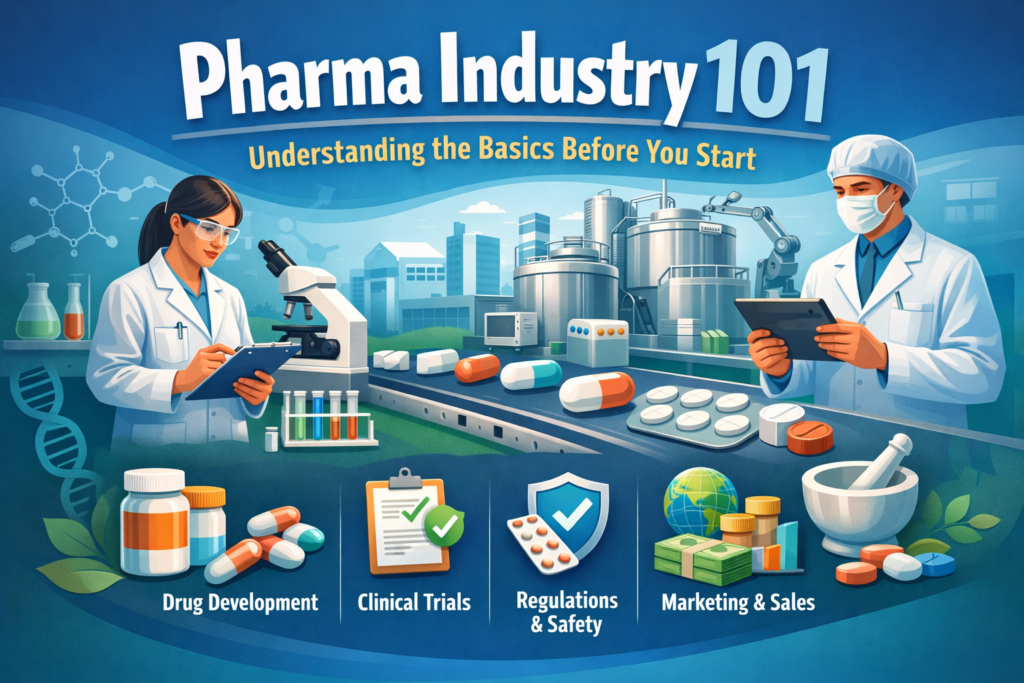
The pharma industry is among the most important and heavily regulated industries worldwide. The pharma sector is fundamental in advancing global health through drug discovery, production, and distribution of drugs that will help combat ailments, treat symptoms, and improve people’s quality of life. If you are an entrepreneur, investor, or career professional and/or have plans to be a part of this industry, you need to understand the basics before doing so.
This guide offers an overview of the overall pharma sector and its main characteristics so that you will have a good starting point and make educated decisions.
What is the Pharma Industry?
The pharma industry is the part of the economy that is involved in discovering, developing, producing, and selling pharmaceutical products, including both prescription drugs and over-the-counter (OTC) products, used to treat patients with various levels of medical need.
At its most basic level, the pharma industry represents the combination of science, technology and commerce and produces healthcare solutions. The pharma industry operates under strict regulations that ensure product safety, efficacy and quality.
Pharmaceutical Industry Key Segments
It is important to understand the different segments of the pharma industry prior to entering the pharma market.
- Active Pharmaceutical Ingredient (API)
The active pharmaceutical ingredients represent the ingredient in any prescription medication that provides a therapeutic benefit to an individual who takes that medication. Active pharmaceutical ingredients and the corresponding medication that contains that active ingredient are produced as distinct items and then specifically designed to create a finished prescription medication.
- Finished Dosage Forms (FDFs)
The final products you take as a patient (i.e., tablets, capsules, syrups, & injections)
- Generic Medicines
An alternative to branded drugs; have the same active ingredients and similar therapeutic use and purpose.
- Branded Medicines
These are patented drugs that have been studied and developed by pharmaceutical companies after years of research; branded medicines are available from pharmaceutical companies only.
Check out the difference between generic and branded medicines.
- Biotechnology Products
These are the newest generation of treatments that use biological products/agents for therapy; examples – vaccines, monoclonal antibodies and gene therapy.
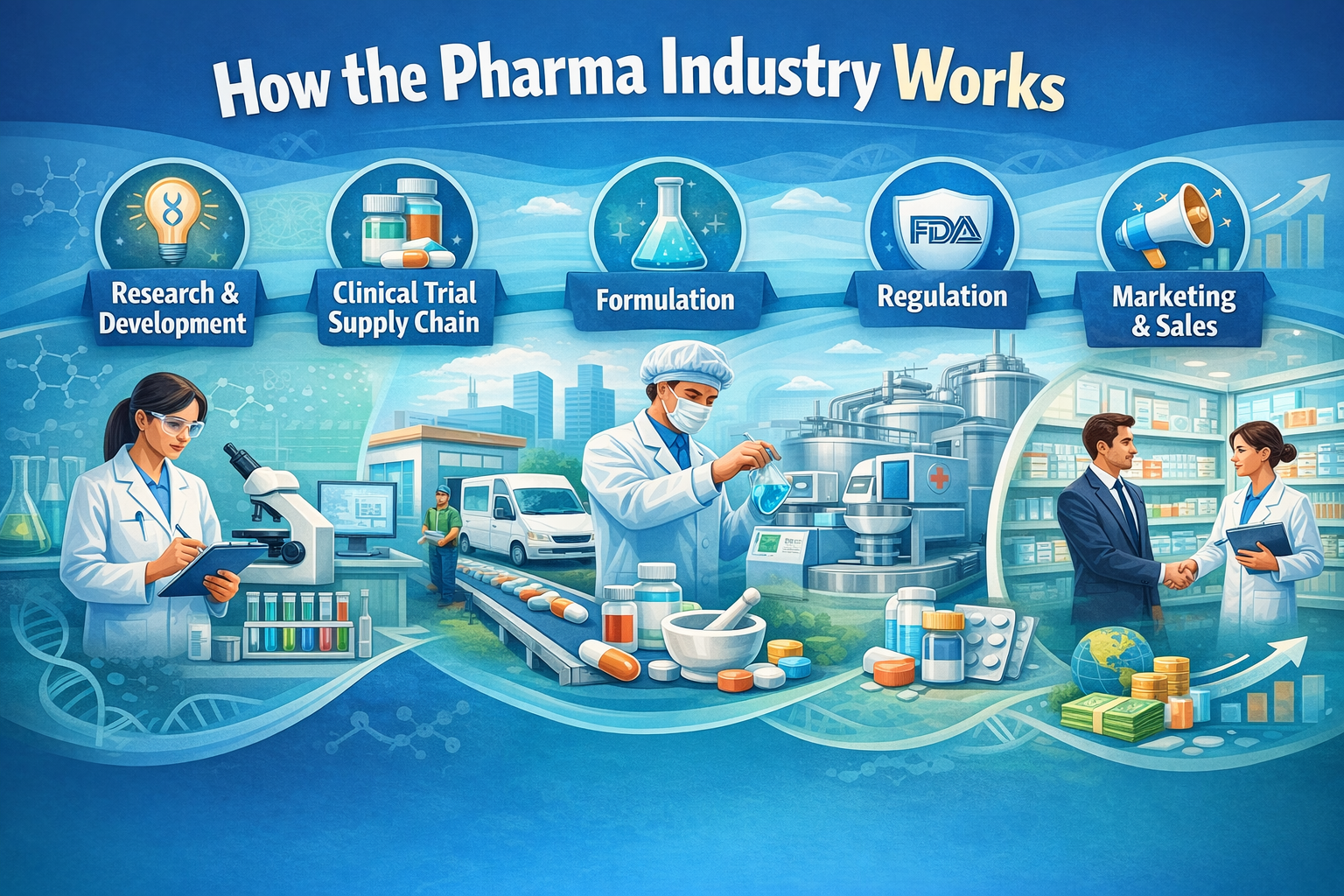
How the Pharma Industry Works
- Research & Development
The R&D segment of the pharmaceutical industry includes everything from early-stage research (preclinical) through the completion of clinical trials, regulatory approval and post-marketing activities for pharmaceutical products.
- Clinical Trial Supply Chain
The clinical trial supply chain includes all parts of the process for delivering drugs to and from clinical sites during clinical trials.
- Formulation
Formulation refers to the process of producing a finished dosage form containing an API and any excipients (inactive ingredients) required to produce the drug.
- Regulation
Drug approval by regulatory agencies such as the Food and Drug Administration (FDA) and European Medicines Agency (EMA) can vary depending on the country and the type of drug or device being developed.
- Marketing & Sales
The marketing and sales segment includes all parts of the promotional and sales processes that drive prescription volume for a company’s products.
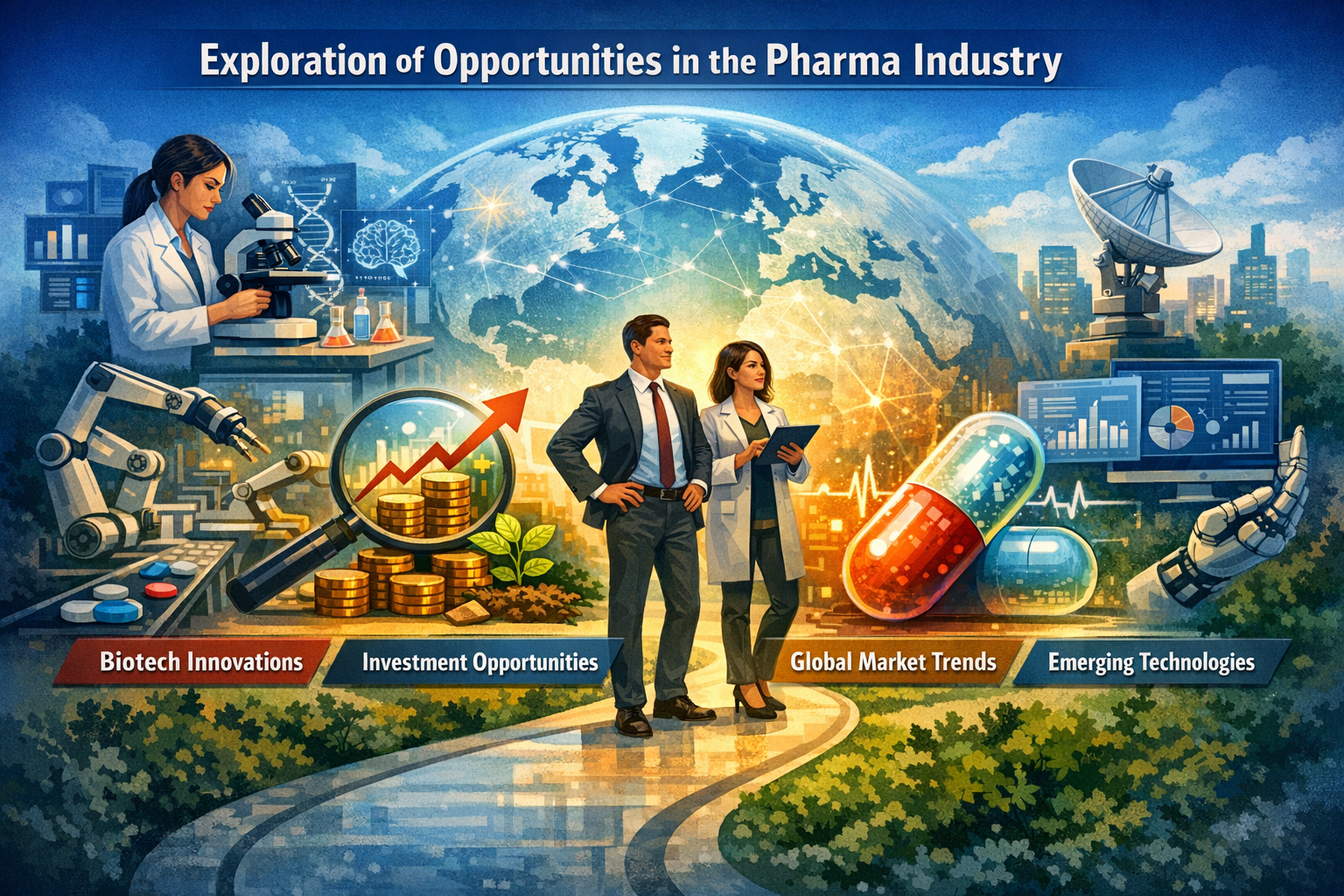
Exploration of Opportunities in the Pharma Industry
As previously mentioned, the pharmaceutical industry is one of the most important and heavily regulated industries in the world. Exploring opportunities in the pharmaceutical industry allows both entrepreneurs and investors to get involved in developing innovative products and services to improve health care for patients across the globe.
For example, in recent years, a number of technologies have emerged that are reshaping how drugs are discovered, developed, manufactured, and marketed. Additionally, numerous areas of the pharmaceutical industry have the potential to benefit from increased financial investment, creating additional opportunities for investors to earn a return on their investment.
In order to explore these types of opportunities within the pharmaceutical industry, entrepreneurs and investors should perform a detailed analysis of current trends within the industry. Additionally, both groups should continuously monitor developments and changes within the pharmaceutical industry as it evolves over time.
Business Models That Exist in Pharma
Before you begin, be sure to choose a pharmaceutical business model. Examples of business models are:
PCD Pharma franchise business model for individuals/companies to distribute pharmaceutical products under a common brand name. With a PCD Business model, there are very few start-up costs; it gives individuals/companies exclusive rights to sell products in a certain geographical area.
A third-party manufacturing Company manufactures to supply to companies only.
Own Manufacturing Plant – With this type of business model, the company has complete ownership and management of the manufacturing. This type of model requires high amounts of capital, regulatory approval and building infrastructure.
Lifevision Healthcare’s Role in the Pharma Industry
Pharmaceutical companies like Lifevision Healthcare have made a significant impact on change in the pharmaceutical industry and have a major impact in the area of frigid distribution, as we provide an extensive range of quality products.
Pharmaceutical Sector Opportunities
Due to increasing healthcare needs and ongoing innovation, the pharma sector is loaded with new opportunities.
The rise in:
- Demand for cost-effective medicines
- Infrastructure growth in healthcare services
- Awareness of Health and Wellness
- Export markets
- Specialised and niche treatments
Consequently, India has become known worldwide as “the pharmacy of the world,” due to its capacity to manufacture generic drugs.
Locate any Challenges
While there are plenty of opportunities in this industry, they are accompanied by huge challenges. There are:
- Strict Regulatory Compliance
- Intense Competition
- Persistent Need for Innovation
- Pricing Pressures
- Complex Supply Chain Management
Understanding these issues early will help you become more successful by preparing you to address them, rather than being negatively impacted by them.
Educational/Skillset Requirements
In order to work within the pharma industry, you must possess both a Technical Skillset as well as a Business Skillset.:
- The basic understanding of pharma sciences
- Knowledge of all regulatory compliance and guidelines for the government
- Understanding of how to market/sell goods/services
- Networking skills
- Business acumen/Knowledge of Financial Planning & Management
If you don’t have an educational background in the sciences, consider working with an experienced company such as Lifevision Healthcare to minimise that gap.
Getting Started
If you’re interested in joining the pharma industry, use the following roadmap as a basic guide for success going forward:
- Find out about the market – find out about the demand, competition, and target market.
- Find a business model – choose between franchising, manufacturing, or distributing.
- Partner with a reputable company – find a reliable partner in someone like Lifevision Health Care.
- Get the required licenses – make sure that you have completed all legal and regulatory requirements.
- Create a network – reach out to doctors, pharmacists and distributors.
- Provide quality and service – provide consistent quality/service to develop trust and a good reputation.
Why knowing the basics is important
If you enter the pharmaceutical space with no knowledge, you are likely to make expensive mistakes. Every aspect of a pharmaceutical business, from regulatory compliance to product quality, will take considerable planning and execution.
If you learn the basics, you will set yourself up for long-term success and will reduce the risks. Whether you are starting with a small franchise concept or you are working toward a larger-scale operation, you must build a strong foundation.
Summary
The pharmaceutical industry is rewarding and very complex. There is a significant opportunity for growth, but success will come from understanding the industry, how to strategise and who to partner with. If you understand the prerequisites, including the industry structure, regulations, business models and market dynamics, you will be able to make informed decisions on how to create a sustainable business.
Partnering with established industry leaders like Lifevision Healthcare can provide you with an easy road to success by offering you the support and expertise necessary to be successful in the pharmaceutical sector.
Frequently Asked Questions for Pharma Industry 101:
How to enter the Pharmacy Sector?
To enter into the Pharmaceutical Sector, the most simplified route is to undertake a PCD Pharma Franchise since start-up costs are lower, and you receive support from established companies already in the market, making it easier for new entrepreneurs to become familiar with and establish a network in the pharmaceutical sector.
Do I need medical experience to set up a business in pharmaceuticals?
No. A medical or pharmacy background will definitely help you view the industry from an educated understanding. However, many successful entrepreneurs partner with knowledgeable companies, such as Lifevision Healthcare, so they can manage the technical part of their business and focus on expanding their business.
What is the start-up investment in the Pharmaceutical Business?
The start-up investment amount will depend on the business model that you choose as to what your start-up costs will be. A PCD pharma franchise will have a moderately sized budget, whereas starting up the manufacturing unit will require a very high start-up investment and infrastructure and/or approvals from various regulatory authorities.
What are the Licensing requirements to set up a business in India?
Generally, you will require a Drug License and GST registration; however, if you plan on manufacturing or distributing a drug to wholesalers, you may need to acquire additional approvals from the Drug Control Authority (DCA) for your operations.
Is the Pharmaceutical Sector profitable?
Yes. The profits associated with the pharmaceutical sector can be very high due to there always being a need for drugs in today’s society, along with the severity of drug laws enforced by the government. However, profits will largely depend on other factors such as the quality of the product, marketing strategy, pricing of the products and consistent compliance with all applicable government regulations.



 Call Us: 8062750200
 Contact Us